Brake Repairs and Replacement in Heywood
Noticed noises, vibration, or wear from your brakes? Heywood MOT Station offers brake inspections and replacements for local drivers, including brake pads and discs. We check your brake parts to see what needs fixing, helping you decide if you need a replacement, more investigation, or another repair.
- Brake Inspections
- Brake Pads & Discs
- Brake Replacements
- Local Repair Support
Brake Inspections
We inspect your brake components to identify wear, damage and possible repair needs.
Brake Pad Replacement
We check brake pad condition and advise when replacement may be needed.
Brake Disc Checks
We examine brake discs for wear and assess whether replacement is required.
Brake Repair Advice
Get guidance on replacement, further investigation or other brake repairs.
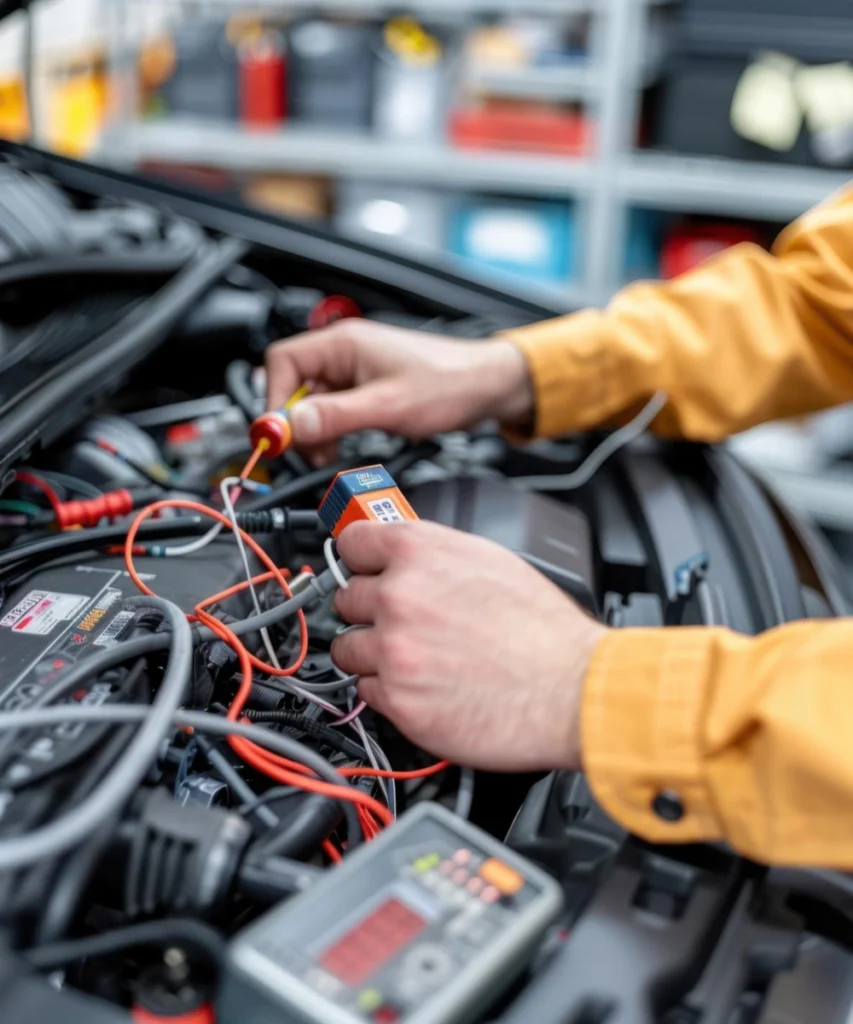
Electrical Diagnostics for Reliable Driving in Heywood
Modern vehicles rely on electrical circuits, sensors, control units, and wiring for many functions beyond starting the engine. Charging, lighting, safety systems, and other daily tasks depend on a reliable electrical supply and solid connections. If something goes wrong, the issue could be a weak power supply, poor grounding, damaged wiring, blown fuses, faulty relays, bad connectors, or problems in the control system.
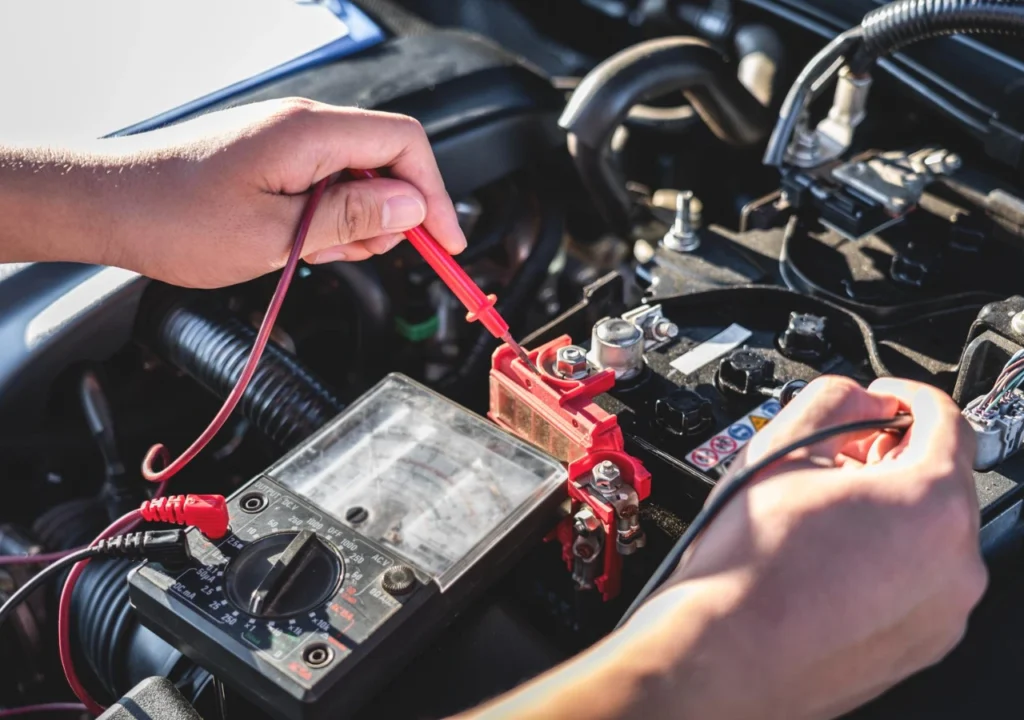
Diagnostic fault codes can help point to issues, but they don’t always pinpoint the exact problem. Effective electrical diagnostics often require checking more than just scan data. Technicians will look at voltage supply, ground connections, wiring, connectors, and relevant components. If multiple systems are affected, a broader Car Diagnostics check can be useful. For immediate dashboard warning light issues, Warning Light Diagnostics is recommended.
Low battery voltage or charging issues can trigger warning lights or cause electrical systems to act irregularly, even if those systems aren’t directly faulty. Intermittent problems can be trickier to identify since symptoms might disappear before the vehicle gets to the shop. If the battery is the issue, Battery Replacement may be the right next step instead of assuming every electrical problem needs a new battery.
Electrical diagnostics differ from ECU diagnostics. While a control unit might log a fault, the actual cause could be wiring, connectors, power supplies, or other circuit components rather than the ECU itself. Heywood MOT Station offers local electrical fault investigation in Heywood to help find the root cause before discussing any necessary Car Repairs or follow-up work.
Signs Your Brakes May Need Attention
Your braking system is crucial for safety. It's important to notice any changes in how it works. Early signs of trouble can include strange sounds, different pedal feel, or dashboard alerts. Spotting these issues quickly can help avoid serious problems.
Brake Noises
Noises like squealing, grinding, or clicking may mean your brake pads are worn, or parts are dirty. However, you need a full inspection to find the exact problem and avoid more damage.
Brake Feel Changes
If your brakes vibrate, pull to one side, or feel soft or stiff, it could mean worn brakes or other problems. These signs might also come from tyres, suspension, or alignment issues. A thorough check is necessary to find the real problem. Early diagnosis keeps your brakes safe and prevents extra costs.
Warning Lights & Wear
Brake or ABS warning lights, visible wear, or MOT issues may indicate problems with the braking system. These could be related to sensors, fluid levels, or worn parts. You need diagnostics and inspection to confirm the issue and plan repairs. Ignoring these signs can lower your braking performance and safety.
Dealing With an Intermittent Electrical Problem?
If your car often has battery problems, difficulty starting, flickering lights, warning lights, or electrical features that act up, come to Heywood MOT Station. We can check what’s wrong and help find the cause. Our Electrical Diagnostics can help identify the issue before making repairs or replacing parts.
What Happens During Brake
Inspection and Replacement?
Brake inspection and replacement is a systematic process that finds wear, spots issues, and makes sure the braking system works safely and well. It includes checking important parts, determining what work is needed, and doing only the repairs or replacements required based on the vehicle's condition.
Inspect Brakes
First, we check the braking parts related to the issue, like pads, discs, callipers, hoses, and brake lines. We only remove necessary parts to check wear and find the problem.
Confirm Repairs
After the inspection, we determine what needs repair or replacement. Worn pads do not always mean other parts are bad, and noise doesn’t always indicate bad pads. We make recommendations based on their condition and symptoms.
Do Repairs
Once we agree on the repairs, we complete the necessary brake work, which may include replacing pads or discs. We discuss any other problems found before continuing. Repairs are based on the inspection, not a standard list.
Final Check
After finishing the work, we check the brakes again to ensure the problem is fixed. If warning lights stay on, more diagnostic checks may be needed. An MOT retest might also be necessary if the repair followed a failure.
Why Choose Heywood MOT Station for Electrical Diagnostics?
Heywood MOT Station offers thorough electrical diagnostics to find problems with your vehicle’s wiring, battery, charging system, and electronic parts. We combine diagnostic tests with hands-on inspections to pinpoint the cause and clearly describe any suggested repairs.
Local Diagnostics
We help drivers in Heywood and nearby areas find electrical problems in their vehicles, including issues with wiring and power systems.
Beyond Codes
Fault codes can give hints about problems, but some issues need checking wiring, power supply, connections, or parts to find the exact cause.
Battery and Charging
The battery's condition, charging ability, and voltage affect many systems. If tests show it's the battery, we might recommend a battery replacement.
Intermittent Faults
For electrical problems that appear and disappear, we look at symptoms, fault history, and available evidence to find the likely cause.
Diagnostic Services
Depending on the system involved, we might carry out Car Diagnostics, Warning Light Diagnostics, ECU Diagnostics, or Engine Diagnostics.
Repair Support
If we find a specific repair need, we can discuss services like Car Repairs, Battery Replacement, Brake Replacement, or Exhaust Repairs.
Electrical Diagnostics in Heywood & Surrounding Areas
Heywood MOT Station helps drivers with electrical problems like diagnosing faults, starting issues, battery drain, charging troubles, and intermittent electrical issues. From our workshop in Heywood, we assist drivers from nearby areas in Greater Manchester who need help with their vehicle’s electrical systems.
Areas We Support
- Rochdale
- Bury
- Middleton
- Castleton
- Norden
- Bamford
- Birch
- North Manchester
Find the Electrical Cause Before Replacing Components
Electrical faults can have many causes, so we should test before making assumptions. We will look at the symptoms, check diagnostic information, and evaluate the electrical supply, connections, and related systems. This will help us determine if the issue lies with the wiring, battery, a component, or something else.
Electrical Diagnostics FAQs: Clear Answers to Common Car Faults
Identify the causes of warning lights, battery drain, starting problems, and other electrical issues.
Electrical Diagnostics check the car’s electrical parts, like circuits, wiring, power supply, and electronic components. This process usually involves looking at fault codes, testing battery voltage, inspecting fuses and connectors, and checking affected circuits. The goal is to find out why an electrical system isn’t working correctly before changing any parts.
Electrical Diagnostics deal only with electrical problems like wiring issues, bad connections, battery drains, and blown fuses. Car Diagnostics cover a wider range of problems across various electronic, electrical, and mechanical systems. When an issue is clearly electrical, Electrical Diagnostics provides a targeted starting point.
Common signs include trouble starting, dead batteries, flickering lights, inconsistent electrical features, blown fuses, unexpected warning lights, and systems acting erratically. These signs alone don’t pinpoint the problem. Electrical testing might be necessary to find out if the issue is with wiring, connections, power supply, battery health, or a component.
A battery may go flat for several reasons. It could be weak, or there might be charging problems or poor connections. Sometimes, electrical components mistakenly draw power while the car is parked. How you use the car can also impact battery life. Electrical checks can help identify whether the battery is the issue or if there are other electrical problems, rather than just assuming replacing the battery will fix everything.
No, a flat battery doesn't always need a replacement. The issue might be due to the battery's condition, charging problems, electrical drain, poor connections, or other issues. Testing is necessary to confirm if the battery is truly weak before suggesting a replacement. If the battery is found to be the problem, then replacing it can be a good next step.
Yes, a charging fault can affect the voltage for other electrical systems. This might lead to warning lights, dim lights, starting problems, or unusual behaviour. However, these signs don’t always mean the alternator is faulty. You should also check connections, wiring, battery condition, and other parts of the charging system to find the real issue.
Flickering or dim lights can come from an unstable electrical supply, poor connections, battery issues, wiring problems, or faults in the lighting circuit. The exact cause depends on when the issue happens and if other electrical systems are affected. Electrical diagnostics can help find the cause instead of just replacing the lighting parts based on the symptom.
An electrical feature that works sometimes may have issues with wiring, connectors, switches, relays, ground connections, power supply, or the part itself. Some issues appear after vibrations, temperature changes, wet conditions, or specific movements. Because the problem might go away before inspection, it's important to look at the history of symptoms and available diagnostic evidence when dealing with intermittent faults.
A fuse blows when too much current flows through a circuit. If the same fuse keeps blowing, there might be a short circuit, damaged wires, a broken electrical part, or another issue. Just replacing the fuse won't fix the problem. You need to check the affected circuit to find out why the fuse keeps failing.
Yes. Problems with wiring, damaged connectors, or weak electrical connections can trigger warning lights. This happens when control systems don’t get the signals or voltage they expect. However, warning lights can have many causes. If you see a warning light, Warning Light Diagnostics can help find out why it’s on and if there's an electrical problem.
Yes. Bad or loose electrical connections can lead to intermittent faults because voltage or signals may change when the vehicle moves or vibrates. Intermittent problems can also involve wiring, switches, relays, components, or power supply issues. Just the symptoms aren’t enough to pinpoint the exact issue.
Multiple warning lights can be triggered by one electrical issue, like unstable voltage, shared power problems, or communication faults between systems. There may also be several separate issues. Always investigate multiple warnings rather than assuming they are from the battery or ECU. Car Diagnostics or Warning Light Diagnostics can help with this.
Yes. Low or unstable battery voltage can trigger several fault codes because electronic control units may not receive the expected voltage. However, not every code is due to the battery. You should evaluate the battery condition, charging performance, supply voltage, and other factors before determining which faults are real and require further investigation.
Yes. Electrical Diagnostics can help check if an unexplained battery drain is due to an electrical load that stays active when the vehicle is parked. Battery drain can result from various issues, so consider the battery condition, charging performance, and the overall electrical system. The right tests depend on the vehicle and the specific symptoms, and not all flat batteries are due to parasitic drain.
No. Many electrical faults do not create a diagnostic trouble code. Some problems, like a disconnected circuit, may generate a code, but issues like poor connections, wiring faults, or intermittent power loss may not leave any scan information. This is why proper Electrical Diagnostics includes both electrical testing and reading fault codes.
Usually not. A fault code indicates an issue in a system or circuit but doesn’t specify which component has failed. The problem could be with wiring, connectors, power supply, ground connection, sensor, actuator, or something else. Treat fault codes as clues that guide further testing rather than as instructions to replace a specific part.
Electrical Diagnostics looks at wiring, circuits, power supply, grounds, fuses, relays, and connectors to find faults. ECU Diagnostics focuses on problems with the ECU (Engine Control Unit) or other control units, checking if the ECU itself is faulty. Sometimes, an ECU fault code can arise from issues in wiring, voltage, or communication, not just the ECU.
After identifying the fault, you will be informed about the affected circuit or component. The garage will explain whether further testing or repairs are needed. If the issue is within the services offered by Heywood MOT Station, options like car repairs or battery replacement will be discussed.
Yes, certain electrical faults can lead to an MOT failure if they affect items checked during the inspection. This can include malfunctioning lights or warning indicators related to safety systems. Whether a fault impacts the MOT depends on the system and the test requirements. If an electrical issue causes a failure, MOT Failure Repairs may be necessary.
Yes. Heywood MOT Station offers Electrical Diagnostics for problems like intermittent faults, starting issues, battery drains, flickering lights, or fuse problems. Share what you've noticed and when it happens to help guide the investigation. You can schedule an Electrical Diagnostic Check by contacting us.