Brake Repairs and Replacement in Heywood
Noticed noises, vibration, or wear from your brakes? Heywood MOT Station offers brake inspections and replacements for local drivers, including brake pads and discs. We check your brake parts to see what needs fixing, helping you decide if you need a replacement, more investigation, or another repair.
- Brake Inspections
- Brake Pads & Discs
- Brake Replacements
- Local Repair Support
Brake Inspections
We inspect your brake components to identify wear, damage and possible repair needs.
Brake Pad Replacement
We check brake pad condition and advise when replacement may be needed.
Brake Disc Checks
We examine brake discs for wear and assess whether replacement is required.
Brake Repair Advice
Get guidance on replacement, further investigation or other brake repairs.
Get to the Root of the Problem with Car Diagnostics in Heywood
Modern cars use electronic systems and sensors to monitor parts like the engine, emissions, brakes, and charging. When something goes wrong, the car often saves a fault code and turns on a warning light. A diagnostic check can help find which part needs more attention.
A stored fault code can guide repairs, but it doesn’t always show what’s broken. It must be looked at with the symptoms and how the car acts. Depending on the issue, further checks may include looking at live data, inspecting parts, testing the electrical system, or checking the vehicle mechanically.
Car diagnostics in Heywood can help with engine lights, starting issues, emissions problems, electrical faults, hesitation, poor performance, or reduced efficiency. However, not all problems will show a fault code. Some mechanical issues might require a direct inspection, so a broader car repair or vehicle health check may be needed.
Diagnosis and repair are two different steps. After finding the likely cause, the information can help decide if more work is needed, like replacing a battery, fixing the exhaust, or addressing an MOT failure. The Heywood MOT Station offers local support to help drivers identify issues before any repair work.

When Might Your Car Need Diagnostic Testing?
You might need diagnostic testing if your car shows warning lights, has starting or performance issues, or has strange electrical problems. A diagnostic check can help find the problem, but additional inspection is usually necessary to confirm the cause and suggest the correct repair.
Warning Lights
Engine, ABS, brake, airbag, and battery warning lights can have various causes. A diagnostic check can help identify the issue, but the light alone does not confirm a broken part. Additional checks might indicate the need for brake or battery replacement or other car repairs.
Performance Problems
If the car has trouble starting, hesitates, runs poorly, loses power, misfires, or has emissions issues, diagnostic testing is needed. The fault information can help find the cause, but physical checks may still be necessary before suggesting battery replacement, exhaust repairs, or MOT failure repairs.
Electrical Faults
Warning lights that turn on and off, frequent dead batteries, or inconsistent electrical features can be hard to diagnose. If the fault isn't present during inspection, stored fault history and live data can help. Further electrical checks may be needed, and broader car repairs might be required for a complete diagnosis.
Got a Warning Light or Unexplained Car Fault?
If your car has a warning light, won’t start, is losing power, or has any other problem, let us know what you’ve seen. Heywood MOT Station can look into the issues, check the diagnostic information, and do more tests if needed to find the cause.
What Happens During a Car Diagnostic Check?
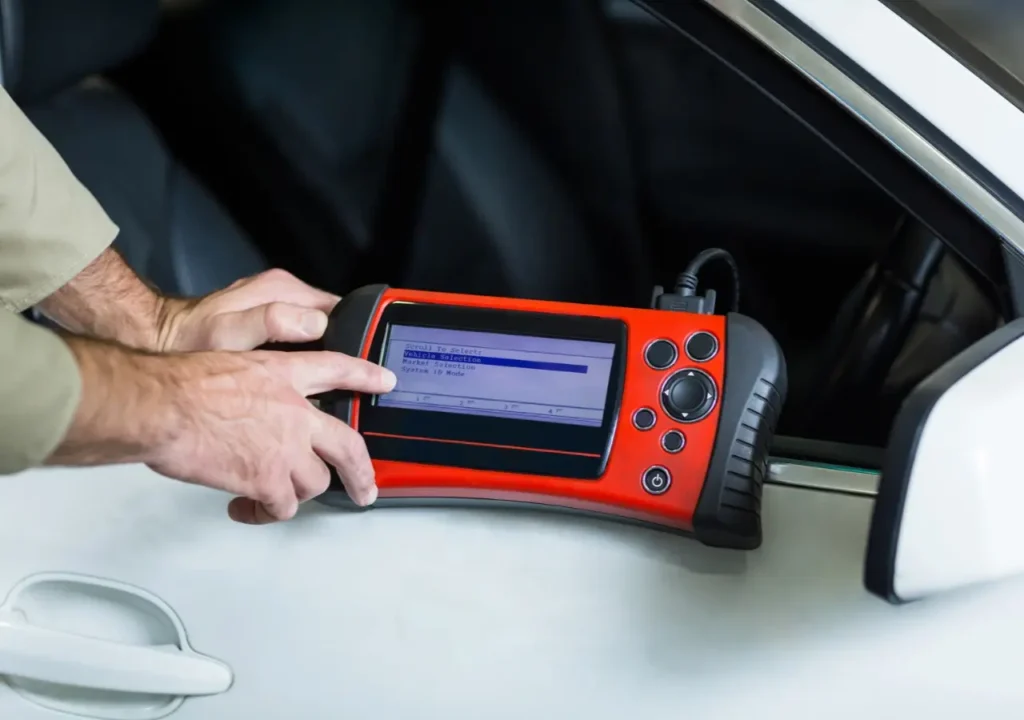
A car diagnostic check connects special equipment to your vehicle to find fault codes and system data. This helps identify the reasons for warning lights, starting problems, or other issues. More checks might be needed to pinpoint the exact problem.
Check the Symptoms
Diagnosis begins with what you've noticed, like a warning light, starting issues, or other irregularities. Recent repairs, battery work, or changes in performance can also help identify the problem.
Read Diagnostic Information
Using diagnostic tools can help check fault codes, system status, and live data. A fault code can guide your investigation but doesn't always mean a part needs replacing.
Confirm the Cause
Fault codes and symptoms might require electrical tests, visual or mechanical checks, or comparisons of sensor readings. Some problems need multiple steps for confirmation.
Explain the Repair
Once we understand the likely cause, we can discuss our findings and suggest whether further testing or repairs, like battery replacement, exhaust repairs, brake replacement, suspension repairs, or clutch replacement, are needed.
Why Choose Heywood MOT Station for Car Diagnostics?
Heywood MOT Station provides car diagnostic support for drivers in Heywood and nearby areas. We use diagnostic tools to assess your vehicle’s symptoms and condition, helping us find possible issues. We clearly explain our findings and recommend the best steps to take before any repairs are done.
Local Diagnostic Support
Heywood MOT Station offers car diagnostic support for drivers in Heywood and nearby areas. We help with warning lights and vehicle issues.
Fault Codes in Context
We consider diagnostic fault codes along with your symptoms and vehicle behaviour. They are not just instructions to replace parts.
More Than Code Reading
Some issues require more than a diagnostic scan. We perform extra electrical, mechanical, or physical checks to find the real problem.
Clear Findings Before Repairs
We explain the diagnostic results, which system is affected, and whether you need a repair or more investigation.
Support for Common Faults
Diagnostics help identify issues with the engine, emissions, battery, charging, ABS, and other electronics before deciding on repairs like battery replacement or brake work.
Support After Diagnosis
Once we identify the likely cause, we can discuss the best next steps for car repairs, battery replacement, exhaust repairs, brake replacement, suspension repairs, or car servicing.
Car Diagnostics in Heywood & Surrounding Areas
Heywood MOT Station helps drivers in Heywood and nearby areas with warning lights, starting issues, electrical problems, emissions worries, and other car troubles. Come to our Heywood workshop for hands-on diagnostics and support when your car isn’t working right.
Supporting Drivers Across the Local Area
- Rochdale
- Bury
- Middleton
- Castleton
- Norden
- Bamford
- Birch
- North Manchester
Find the Cause Before Replacing Parts
Tell us what your car is doing, when the problem happens, and which warning lights are on. We will check this information and do more tests if needed. This helps us find the cause before replacing any parts and allows us to discuss the right repair.
Car Diagnostics FAQs: Clear Answers to Common Vehicle Problems
Get clear answers about warning lights, fault codes, diagnostic tests, and what to expect when your vehicle needs additional checks.
A car diagnostic check looks into warning lights, electrical issues, engine problems, and other vehicle troubles. Special tools read stored fault information and vehicle data. These results are then compared with the symptoms. Further checks may follow before deciding on a repair.
You should consider diagnostic testing if your car shows a warning light, has trouble starting, loses power, runs poorly, behaves erratically, or has an emissions issue. It’s also helpful if an electrical feature acts strangely. A diagnostic check is especially important when the problem isn’t obvious from a simple inspection.
A diagnostic scanner connects with vehicle systems to gather information like fault codes, system status, and live data. This helps identify where a problem might be. However, the scanner doesn’t specify which part to replace, so additional checks may be needed.
A diagnostic fault code, or trouble code, is information saved by a vehicle when it detects an issue in a monitored system. The code points to a system or condition needing attention. It serves as a clue for diagnosis, not a certain indication of a broken part.
No. A fault code shows the area that triggered the vehicle’s monitoring system, but multiple issues can cause the same code. Factors like wiring, connections, or mechanical problems may need checking. Replacing a part based only on the code can lead to unnecessary repairs.
No. Car diagnostics help with electronic systems, but not all problems show a fault code. Some mechanical issues need physical checks, road tests, or electrical tests. Diagnostics are useful, but they can’t find every problem.
The engine light can turn on for many reasons related to engine operation, emissions, sensors, or electrical systems. The light itself doesn’t show which part is failing. Checking the stored diagnostic data can help, but further testing may be needed.
Yes, diagnostics can help with an ABS warning if the vehicle shows fault information. A code may point to a specific issue, but more checks may be necessary to confirm the cause. An ABS warning doesn’t always mean you need a Brake Replacement part.
Yes, diagnostics can help with an airbag warning by checking stored fault information. The cause may relate to sensors, wiring, or other parts, so the light alone doesn’t provide a full diagnosis. More inspections or tests may be needed.
A battery or charging warning light usually signals a problem in the vehicle's charging or electrical system, not necessarily a faulty battery. Possible causes vary by vehicle. Using diagnostic tools and electrical checks can help find the issue before deciding if you need to replace the battery or make another repair.
Yes, diagnostics can help if your vehicle is hard to start, starts only sometimes, or shows warning lights. The fault codes can point to the issue, but starting problems may also involve the battery, the charging system, the starter circuit, fuel delivery, or mechanical issues. More tests may be needed.
Yes, if your car loses power, hesitates, runs poorly, or goes into reduced-performance mode, diagnostics can help. Fault codes and vehicle data can show which system needs fixing. However, these issues can have several causes, so mechanical inspections or extra tests may still be necessary before suggesting repairs.
Yes, diagnostics can check emissions warning lights and related issues affecting your vehicle’s performance. Stored data may help identify which system needs further checking. However, an emissions issue isn't always caused by the exhaust. Mechanical, electrical, or engine checks might be needed before doing exhaust repairs.
A warning light may come on when a fault happens under specific conditions and then turn off when those conditions change. The vehicle may still have fault history that can provide useful information. Tracing these intermittent faults can be more complex than solving constant warning lights.
Yes, intermittent faults can be checked, but they can be harder to track since the symptoms may not show up in the workshop. Fault history, live data, electrical checks, and information about when the problem occurs can all help. Sometimes, more tests or a later evaluation may be needed to identify the cause.
No. Clearing a fault code only turns off a warning light or removes old diagnostic data. It doesn't fix the actual issue. If the problem still exists, the code or light may come back. Always find out why the code appeared before making repairs or replacing parts.
After identifying the likely cause, the results should be clearly explained, and the next steps discussed. This may involve car repairs, services like battery or exhaust fixes, or more investigation if needed. Diagnostic testing and repairs are usually separate unless agreed otherwise.
No. A diagnostic check looks for the cause of a warning light, electrical issue, or other symptoms. Repairs happen after the fault is confirmed. Sometimes a diagnosis leads directly to a specific repair, while other times further testing is needed before replacing parts.
Yes, warning lights, emissions issues, and electronic faults can lead to MOT failures, depending on what the test records. Diagnostic testing helps find the cause before making repairs for an MOT failure. What to do next depends on the MOT result and identified faults.
Yes. Heywood MOT Station offers car diagnostics for issues like warning lights, starting problems, emissions, performance, and electrical faults. Describe your symptoms to the garage so they can start the diagnostic process with relevant background information.